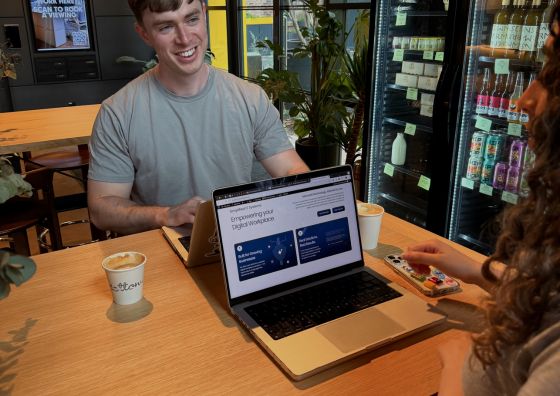
Web Development Trends Shaping 2025
The landscape keeps shifting. What worked two years ago in web development feels almost quaint now, and the pace isn’t slowing down. That may be overstating it slightly, but the changes coming through 2025 are reshaping how we think about building for the web. It’s not just about new frameworks or shinier tools. The entire approach to website development is evolving around speed, accessibility, and increasingly, intelligence baked right into the workflow.
Ready to future-proof your website? Book a consultation with The Social Bay to discuss how these 2025 trends can work for your business.
The Evolving Role of a Web Developer
The web developer job role is no longer what it used to be. There was a time when the focus was almost entirely on getting code to work, making sure pages loaded, and keeping everything functional. That still matters, obviously. But now the role has expanded in ways that feel both exciting and, frankly, a bit overwhelming at times.
Developers are expected to understand user experience at a much deeper level. It’s not enough to build a feature that works; it must also be effective. It needs to feel intuitive, load quickly, and work seamlessly across devices. The lines between developer and designer have blurred considerably. Many teams expect developers to collaborate closely with design and content teams, sometimes even taking the lead on accessibility decisions or performance optimisation strategies.
Then there’s the SEO component. Semantic HTML, proper heading structures, schema markup, these aren’t just nice-to-haves anymore. They’re fundamental web developer duties that directly impact how a site performs in search. The technical side of SEO has become inseparable from development work, making it more critical than ever to stay current on best practices.
Perhaps the most significant shift is the collaborative nature of modern development. It’s rare to work in isolation. Most projects involve constant communication with marketing teams, strategists, content creators, and stakeholders who may not understand technical limitations. Balancing technical excellence with business needs is its own skill set.
Key Duties and Responsibilities in Web Development
So what does the day-to-day actually look like now? The core web developer duties have expanded beyond writing clean code. Sure, that’s still foundational. However, building functional and performant websites requires a broader toolkit.
Performance optimisation sits near the top. Users expect pages to load in under three seconds, ideally faster. That means compressing images, minimising JavaScript, leveraging browser caching, and sometimes making tough calls about which features actually serve the user versus which ones just add bloat.
Accessibility is non-negotiable. WCAG compliance isn’t just about avoiding legal issues; it’s also about ensuring accessibility for all users. It’s about building websites that everyone can use, regardless of ability. Screen reader compatibility, keyboard navigation, and proper contrast ratio; these considerations must be integrated from the start, not added later.
Cross-browser and device testing remains tedious but essential. With the sheer variety of screen sizes, browsers, and operating systems, ensuring consistent experiences takes real effort. Mobile-first design has evolved from a trend to a standard practice, which fundamentally shifts how we approach layout and interaction design.
Security responsibilities have grown, too. Basic SSL isn’t enough. Developers need to understand authentication, data protection, input validation, and how to mitigate common vulnerabilities. It’s not optional knowledge anymore.
Website Development Trends to Watch in 2025
Several patterns are defining website development heading into 2025, and they’re worth paying attention to because they’re changing client expectations and project scopes.
Speed continues to dominate. Core Web Vitals are here to stay, and Google’s emphasis on page experience means that performance directly impacts visibility. Static site generators and edge computing are gaining ground because they deliver the speed users demand. Traditional CMS platforms are adapting, but the pressure is on to provide near-instant load times.
Mobile-first is no longer just a design philosophy; it has become a fundamental approach to design. It’s a development requirement. With mobile traffic consistently outpacing desktop, starting with mobile layouts and scaling up makes more sense than the reverse. Responsive design is table stakes, but truly mobile-optimised experiences go deeper, considering touch targets, simplified navigation, and reduced data usage.
AI integration is becoming standard, though not in the ways people expected a year ago. It’s less about chatbots on every page and more about intelligent features that enhance the user experience. Content recommendations, personalised interfaces, and automated testing are practical rather than flashy. Even engaging users with animated website design has evolved beyond simple transitions to intelligent, performance-conscious motion that responds to user behaviour and device capabilities.
Component-based architecture has won. Whether it’s React, Vue, or something else, building reusable components makes maintaining and scaling websites far more manageable. This approach aligns well with design systems, enabling consistency across large projects.
How Web Development Companies Are Adapting
The structure of how web development companies operate has shifted noticeably. Remote and hybrid work models are now standard, which changes team dynamics and communication patterns. Distributed teams can access broader talent pools, but coordination requires more intentional effort.
Agency models are evolving, too. Many web development companies now offer ongoing partnerships rather than just one-off projects. Websites need continuous updates, security patches, performance monitoring, and content adjustments. The old model of “build it and hand it off” doesn’t fit modern needs as well. Regional agencies, whether they’re operating as a Manchester web design agency or elsewhere, are finding that local businesses still value the ability to meet face-to-face occasionally, even whilst embracing hybrid working arrangements.
Client expectations have risen. People come to projects with more knowledge about web development, sometimes with specific requests about frameworks or features. They expect faster turnarounds, transparent communication, and often want to be involved in the development process. The days of disappearing for weeks and unveiling a finished product are largely behind us. Smart businesses know to research thoroughly, understanding the top questions to ask before hiring a web design company to ensure alignment on goals, timelines, and technical approach.
Specialisation within teams has increased. Rather than generalists handling everything, many web development companies now have specialists for front-end, back-end, UX, accessibility, and performance. This allows for more profound expertise but requires tighter coordination.
UX, Speed, and Accessibility in Modern Builds
These three elements have become inseparable in quality website development. Treating them as separate concerns or afterthoughts leads to problems down the line.
User experience now drives technical decisions. Every feature, animation, or interaction is evaluated not just on whether it’s possible, but also on whether it actually serves the user. Sometimes the best UX decision is removing something rather than adding it. Simplicity often wins, though convincing stakeholders of that can be its own challenge.
Speed impacts everything. Slow sites frustrate users, hurt conversion rates, and get penalised in search rankings. Optimising for speed means making choices about third-party scripts, image handling, and server configuration. Tools like Lighthouse provide clear metrics, but interpreting them and implementing fixes requires technical knowledge and strategic thinking.
Accessibility needs to be woven into the development process from the beginning. Retrofitting accessibility is expensive and often incomplete. Building with semantic HTML, proper ARIA labels, and logical document structure from day one makes everything easier. Testing with actual assistive technologies matters more than just running automated audits.
AI and Automation in Web Development Workflows
The practical applications of AI in web development are starting to show real value, though the hype sometimes overshadows the reality. Code generation tools have gotten surprisingly good at handling routine tasks. They’re not replacing developers, but they’re definitely changing how we work.
Automated testing has improved significantly. AI-powered testing tools can identify edge cases and potential bugs more efficiently than manual testing alone. This doesn’t eliminate the need for human oversight, but it does speed up the process and catch issues earlier.
Content integration is another area where automation can be beneficial. Dynamic content systems that adapt based on user behaviour or preferences are becoming more sophisticated. These require thoughtful implementation to avoid feeling creepy or intrusive; however, when done well, they genuinely enhance the user experience.
Code review assistance may not be as exciting, but it is useful. Tools that flag potential issues, suggest optimisations, or identify security vulnerabilities help maintain code quality, especially on larger teams where consistency matters.
Front-End vs Back-End: Skills That Matter Most
The distinction between front-end and back-end development remains, but the skill sets are converging in interesting ways. Full-stack developers are increasingly valuable, though actual expertise in both areas is rare.
On the front-end side, framework proficiency matters. React remains dominant, but Vue and Svelte have their advocates. More important than the specific framework is understanding component architecture, state management, and how to build maintainable, performant interfaces. CSS has grown more powerful, and modern layout techniques, such as Grid and Flexbox, are essential knowledge.
Back-end developers need to understand API design, database optimisation, and server architecture. Serverless computing is changing deployment models, and understanding when to use traditional servers versus serverless functions is valuable. Security knowledge is crucial, as is understanding how to structure data efficiently.
The middle ground is where much innovation occurs. Understanding how front-end and back-end systems communicate, optimising API calls, and structuring applications for scalability requires knowledge of both domains.
Building Scalable, Mobile-First Websites
Scalability isn’t just about handling traffic spikes. It’s about building website development projects that can grow with changing needs without requiring complete rebuilds.
Mobile-first architecture shapes everything from navigation patterns to content hierarchy. Starting with the constraints of mobile screens forces clarity. What’s truly essential? What can be simplified or removed? These questions lead to better design decisions even for desktop experiences.
CMS flexibility matters for scalability. Headless CMS solutions are gaining traction because they separate content management from presentation, allowing for more flexible and dynamic content management. This allows for more flexibility in how and where content appears, but it also adds complexity. Traditional platforms like WordPress aren’t going away, but they’re adapting to meet modern performance and security standards.
Performance optimisation becomes more critical as sites scale. Caching strategies, content delivery networks, and database optimisation all play roles. These aren’t one-time tasks but ongoing responsibilities. Budget-conscious businesses searching for affordable web design options in Manchester, for instance, still need to ensure their chosen solution prioritises these technical fundamentals rather than just keeping initial costs low.
Web Developer Job Roles in a Hybrid Work Era
The shift to remote and hybrid work has changed how web developer job roles function within teams. Collaboration happens differently when people aren’t in the same room. Communication tools, documentation practices, and project management approaches have all adapted.
Asynchronous work has become more common. Not everyone works the same hours, especially on distributed teams. This requires better documentation, more explicit commit messages, and more thoughtful handoffs. The ability to communicate technical concepts clearly in writing is more valuable than it was in the past.
Cross-functional collaboration happens more intentionally now. Regular check-ins with design, marketing, and content teams help keep everyone aligned. These meetings need structure and clear agendas to be effective, rather than just consuming time. Whether working with web design teams in Manchester or collaborating internationally, the principles of clear communication remain constant.
Professional development looks different, too. Conferences and in-person training have moved online in many cases, which makes access easier but reduces some of the networking benefits. Finding ways to stay current with rapidly changing technologies requires more self-direction.
Choosing the Right Web Development Company in 2025
For businesses seeking to hire a web development company, the decision carries more weight than it did in the past. Websites are rarely static projects anymore. They’re ongoing platforms that need regular attention, updates, and optimisation.
Portfolio quality matters, obviously. But look beyond just the visual appeal. How fast do their sites load? Are they accessible? Do they work well on mobile devices? These technical qualities often matter more than surface aesthetics.
Communication style and process deserve attention. How do they handle revisions? What does their project management look like? How transparent are they about timelines and challenges? A web development company that communicates clearly and proactively will make the entire process smoother.
Technical capabilities need to align with project needs. Not every project requires the latest framework or cutting-edge technology. Sometimes, proven and stable solutions are more effective. Understanding what the company specialises in and whether that matches project goals is essential.
Long-term partnership potential might be the most overlooked factor. The initial build is just the beginning. Ongoing support, maintenance, security updates, and future enhancements all matter. Finding a web development company willing to commit to that ongoing relationship often leads to better outcomes than just looking for the lowest bid on a one-off project.
The web development landscape in 2025 rewards adaptability, technical depth, and user-focused thinking. The tools and frameworks will continue to evolve, but the fundamental goal remains: building websites that work well, feel good to use, and serve real needs. Everything else is just details.
Looking to build or refresh a website that keeps pace with 2025 standards? Schedule a web design consultation with The Social Bay, and let’s explore the possibilities for your project. Alternatively, you can contact us at hello@thesocialbay.co.uk or reach us on our mobile at 07441 918230.
Frequently Asked Questions
Is web development still relevant in 2025?
- Web development is crucial as websites form the basis of digital presence. Modern developers must possess skills beyond coding, including UX, accessibility, performance, and SEO, as businesses increasingly view websites as vital tools needing technical expertise.
Will AI replace web developers?
- AI tools excel at repetitive tasks and boilerplate code, but cannot replace the strategic thinking and problem-solving skills of human developers. They serve as helpful assistants, and developers who adapt to work alongside these tools will succeed.
Is MERN Stack dead in 2025?
- MERN Stack is not dead in 2025. It remains popular and valuable, especially for apps that handle large amounts of data and require dynamic functionality. However, it’s no longer the go-to choice for every project. Developers now select tools based on what best suits each project, rather than blindly following trends.
What is the future of web development?
- The future of web development includes more innovative AI tools, faster performance, and stricter accessibility rules. Edge computing and distributed systems will continue to grow, and the line between front-end and back-end work will become increasingly blurred. Web Developers who understand both technology and user needs will remain essential.
Which framework is best for web development in 2025?
- There is no one best framework for web development in 2025. React is popular with a big community, Vue is easier to learn, and Svelte is known for speed. For fast, SEO-friendly sites, Next.js or Nuxt are great choices. The best framework depends on the project, the team’s skills, and the maintenance needs. A good web development team will pick the right tool based on these factors.
Do you still need a website in 2025?
- Yes, most businesses still need a website in 2025. Social media is useful but temporary, while a website is fully owned and controlled. Websites also attract search engine traffic and build credibility. It doesn’t have to be complicated, but it should work well, load fast, and support business goals.