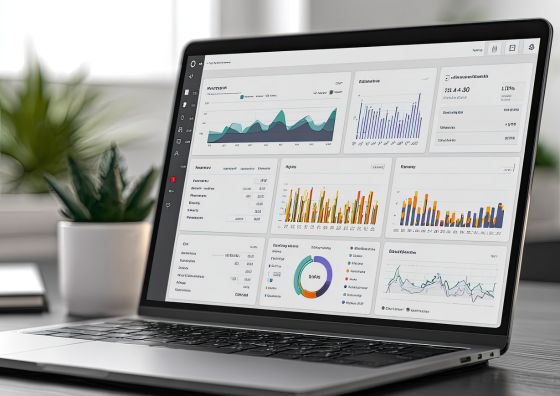
Website analytics connect search engine optimisation (SEO), user experience (UX), and brand outcomes by showing what actually happens when people visit your site, providing teams with the insights needed to make informed decisions.
Used properly, website analytics help business owners, marketers, and performance teams understand priorities, uncover opportunities, and improve results across search visibility, usability, and brand perception.
The Strategic Value of Website Analytics
Website analytics work best when viewed as a strategic resource rather than a reporting tool. When reviewed regularly, behavioural data helps businesses plan with greater clarity and focus effort where it has the most impact.
How Data Supports Smarter Decision-Making
Behavioural and performance data reveal how users move through your site, which pages hold attention, and where momentum drops. This helps teams decide what to improve, expand, or remove based on evidence.
For instance, website performance metrics can highlight the difference between pages that attract meaningful engagement and those that generate traffic without outcomes. This insight makes it easier to direct time and resources towards work that supports real goals.
Why Intuition Alone Isn’t Enough
Experience and instinct matter, but become less reliable as websites grow and user journeys get more complex. In other words, what seems logical internally does not always match how visitors behave.
With analytics, teams can test assumptions before committing to change. By grounding decisions in data, teams reduce risk and ensure actions reflect actual user behaviour rather than expectation alone.
What Analytics Reveal About User Behaviour
Analytics uncover how users behave, showing what works and where friction occurs as journeys unfold, including:
Engagement Patterns
Engagement signals such as time on page, scroll depth, and page order indicate whether content meets user expectations. Strong engagement often reflects clear messaging and relevance, while lower interactions may show unclear intent or content gaps.
By reviewing user behaviour data, teams can identify which pages encourage progression through the site and which struggle to hold attention, making it easier to refine content with purpose.
Drop-Off Points
Exit and abandonment data reveal the points where users disengage. This usually signals friction, whether that comes from confusing navigation, performance issues, or content that falls short of expectations.
With this insight, teams can focus on removing the specific obstacles that cause users to leave, leading to more targeted improvements across the site.
Content Performance
Analytics show how individual pages contribute to wider journeys, highlighting pages that attract traffic without supporting action and those that guide users towards engagement or conversion. This distinction helps teams improve or reposition content using real behaviour, ensuring each page serves a clear role within the experience.
How Analytics Strengthen Your SEO Strategy
For businesses investing in marketing and SEO services in Manchester, analytics strengthen strategy by adding context beyond rankings. They show how visibility drives engagement, relevance, and outcomes throughout your strategy.
These data-driven insights support improvement in several key areas, including:
Identifying High-Value Keywords
While traffic volume offers context, it does not define success on its own. Analytics highlight which keywords attract users who engage or convert, helping teams focus on search terms that support real business goals rather than empty traffic.
Understanding Search Intent
When users land on a page and leave quickly, it often signals a gap between expectation and reality. Analytics reveal these mismatches by showing how people behave on the page, helping teams adjust content to better answer search queries.
Improving Rankings Through Behaviour Signals
Analytics do not raise rankings on their own, but they inform the changes that do. Insights into user behaviour help teams boost relevance, navigation, and engagement, all supporting better SEO over time.
Using Analytics To Improve UX And Navigation
Analytics act as a practical tool for improving UX and navigation by showing specific user behaviour patterns. This makes it easier to spot recurring usability and navigation challenges and address them promptly.
Heatmaps And Scroll Depth
Visual data, such as heatmaps and scroll tracking, shows where users focus their attention and how far they go on a page, revealing which content gets noticed and what is overlooked. Teams can then adjust layouts, move key messages, and simplify pages so important content appears at the right section and moment.
Navigation Bottlenecks
Analytics also reveal how users move between pages of a site. Patterns such as repeated backtracking, stalled journeys, or consistent exits at the same point often signal confusion.
Identifying these bottlenecks allows teams to refine menus, links, and pathways, creating clearer routes that help users reach their goals with less effort.
Mobile Vs Desktop Behaviour
User behaviour often differs between mobile and desktop due to screen size and interaction patterns. Device-level analytics show where mobile users struggle, allowing teams to refine layouts, spacing, and navigation while maintaining a strong experience across all devices.
The Branding Insights Hidden In Your Data
Analytics help measure how users engage with and respond to your brand across touchpoints, shaping and refining your branding strategy. These include:
What Users Value Most
Engagement data shows which messages, topics, and values connect with users. Pages attracting longer visits, deep scrolls, or repeat views reflect usefulness, relevance, or trust. Over time, these signals clarify what resonates most with your audience.
Which Pages Reinforce Your Brand
Pages such as about sections, service pages, and content hubs often shape credibility. Analytics reveal which pages drive the most engagement and which fall short, helping teams strengthen key areas of brand perception.
How Consistency Affects Trust
Analytics show whether users move smoothly between pages or encounter friction that disrupts confidence. Because of this, maintaining consistency across navigation, messaging, and tone supports stronger engagement and credibility. This is just as important for building a personal brand online growth as it is for businesses, where trust is shaped by clarity.
Turning Insights Into Long-Term Growth
Beyond SEO, UX, and branding, analytics support data-driven decisions that drive progress over time, especially when linked to broader digital marketing services.
Continuous Improvement Mindset
Regular review encourages testing, learning, and adjustment. Small changes informed by data compound over time, improving performance without disruptive overhauls.
Aligning Analytics With Business Goals
KPIs should align with business and brand outcomes, not surface-level metrics. Engagement, conversions, and retention matter more than just traffic, and analytics keep teams focused on growth, not vanity figures.
Use Your Data to Drive Smarter Growth
Website analytics show how people experience your site, connecting SEO, UX, and brand growth to guide smarter decisions, reduce wasted effort, and support sustainable progress.
If analytics currently feel disconnected from day-to-day decision-making, it may be time to rethink how insights are used. Speak with The Social Bay to discuss your performance metrics and how behavioural data can support long-term growth. Our team uses analytics as a tool for identifying friction points, improving engagement, and turning insights into measurable performance gains.
Contact us at 07441 918230 or hello@thesocialbay.co.uk, and connect with us on Facebook, Instagram, LinkedIn, and TikTok for ongoing insights and updates.
Frequently Asked Questions About Website Analytics
How can analytics help prioritise SEO improvements?
- Analytics show which pages and keywords drive meaningful engagement, helping teams focus on changes that support visibility and conversions rather than traffic alone.
Which user behaviour metrics matter most for SEO and UX?
- Metrics such as engagement time, scroll depth, navigation paths, and exit points matter most. Together, they reveal whether users find content useful, understand where to go next, and experience friction along the way.
Can strong UX improve organic rankings without new content?
- Improved usability supports engagement and satisfaction, which indirectly strengthens SEO performance even without publishing new pages.
How do SEO and UX teams use analytics differently?
- SEO teams use analytics to understand discoverability, intent alignment, and search-led behaviour, while UX teams focus on navigation, layout, and interaction patterns. Analytics connect both views, allowing teams to improve visibility and usability together.
How often should analytics insights be reviewed for SEO decisions?
- Monthly reviews provide a solid baseline for most sites. However, insights should also be reviewed during campaigns, content launches, site updates, or sudden performance changes to ensure decisions remain aligned with current behaviour.